

“Varsha Ritu” – Is the monsoon season in India.
This year monsoon has come much earlier than usual. Although I am not currently in India, I am fondly remembering how it was always such a welcome relief after such intense summer heat! It is a time of rejuvenation and purification, physically and spiritually.
The air suddenly feels fresh, pure and revitalised, as the rain washes away the toxins and impurities accumulated in the atmosphere and renews the spirit of the land. The joy to see the sudden change in the landscape as it turns to green, flowers burst forth in bloom and the life-giving force it seems to instantly revive and transform nature.
It brings with it such a change of energy it also feels like a cleansing of the mind and soul!
Indeed, according to the ancient wisdom of Ayurveda, the monsoon is a time of purification and renewal. The rains wash away impurities, both in the environment and within ourselves, allowing us to reconnect with our inner selves. This season is also an invitation to slow down and engage in introspection and meditation, fostering a deeper connection with nature and the divine.
During this time, the natural elements are in a state of balance, and the earth seems to breathe a new life. It’s a powerful reminder of the interconnectedness of all living things and the cyclical nature of life. As the monsoon nourishes the land, it simultaneously nurtures our soul, encouraging us to embrace change and growth.
Ayurveda suggests specific practices during this season to enhance spiritual well-being. For instance, engaging in yoga, meditation, mantra and pranayama helps harmonise the body and mind.
Physical Effects & Diet Recommendations
The sudden change in the elements also tends to lead to an aggravation of vata and accumulation of pitta dosha, which can weaken the body systems. Affecting us on a very physical level. Accumulation of pitta dosha specifically affects the digestive system, reducing agni (digestive fire) causing sluggishness and weakness, ultimately resulting in poor digestion.
One should therefore avoid foods that aggravate these doshas further.
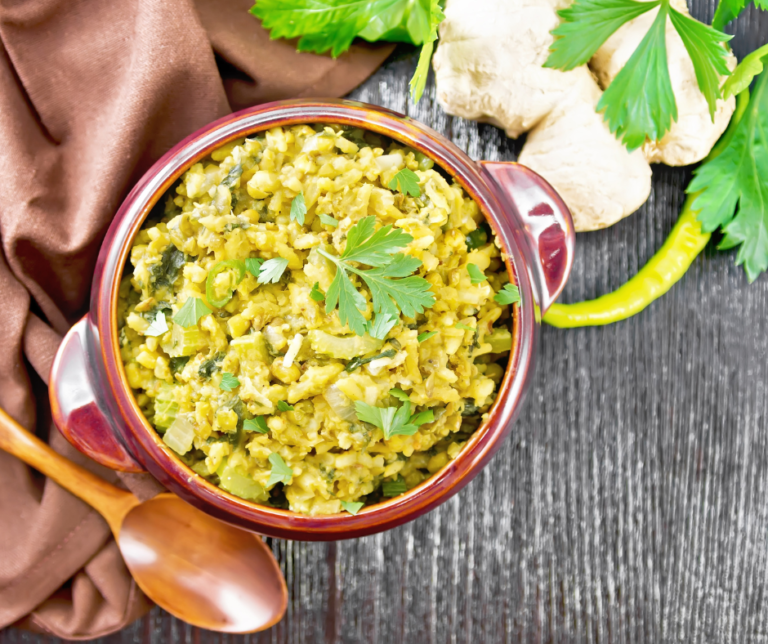
Ayurveda recommends to eat more foods that are of Amla (sour) and Lavana (salt) tastes as well as sweet and unctuous foods, during this season. Diet should be balanced and aligned with this season, avoiding raw foods and instead opting for warm, freshly cooked foods that are easily digestible such as soups, kitchari, seasonable vegetables, ghee, turmeric, ginger, barley, brown rice are all good during this time of year.
It is also important to take extra care with the preparation and storage of food in this climate. As the humidity of a damp environment can quickly lead to the spread of bacteria, parasites, contamination and potential infections.
Herbal teas, such as ginger, cinnamon and tulsi, are recommended to gently warm, boost immunity and help maintain balance and vitality.
Other, more "outer" beauty practices to nourish, care and rejuvenate us during monsoon are:-

Skin care –
Especially for facial skin care, light, non greasy hydration that will not clog pores are key.
For example natural moisturisers that include aloe vera, cucumber, rose water, help to maintain balance and hydration.
For those with drier skin, rosehip oil at night time is a good option for a non clogging oil and natural serum that is suitable for even acne prone skins and will reduce irritation and inflammation for all skin types.
During this season we are naturally more prone to fungal infections, so keeping the skin dry is important. Natural herbal powders can help with this, as well as regularly washing, ensuring the skin is dry before applying oil.
Bathing with a gentle herbal neem soap or using diluted neem oil can be an effective preventative measure.
If you do succumb to an infection, treat the area as soon as possible. Depending where it is, tea tree and lavender essential oils both contain anti fungal properties and can be an effective remedy when mixed with pure coconut oil and applied regularly to clean, dry skin. Black seed and neem oil’s are also both high in antibacterial and antifungal properties.
Abhengha Massage – incorporate this beautifully nourishing, gently stimulating self-care practice into your daily routine. Choose an oil suitable for your skin type (coconut or sesame oils for example) and massage into your skin with long strokes from head to toe, immediately following your shower in the morning.
Hair Care – Oiling the hair and scalp regularly with nourishing oils. Ayurveda especially recommends natural oils such as sesame, coconut or almond oils infused with herbs such as brahmi (Bacopa monnieri or “waterhyssop”), amla (Phyllanthus emblica or “Indian gooseberry”) and bhringraj (eclipta prostrata or “false daisy”).
Covering the hair to protect it from damp and humidity.
Do not over wash and use natural, mild shampoos as much as possible to avoid dryness.
These practices can help reduce dryness, flaky scalp, frizz and hair fall, which are conditions often exacerbated by the change in season.
(Note:- These tips apply anywhere where the climate is humid, damp and wet.)
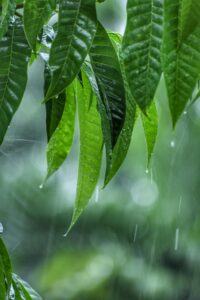
The monsoon season in India is a sacred time to immerse oneself in the beauty of nature, reflect on personal growth, and cultivate a deeper spiritual awareness. It is a season of purification and transformation, urging us to let go of the old and welcome the new with open hearts and minds.
Wishing you a happy and healthy monsoon season, if you are experiencing this season right now!
Do let me know in the comments if it is monsoon where you are and if these tips help you or any of your own that you may like to share.